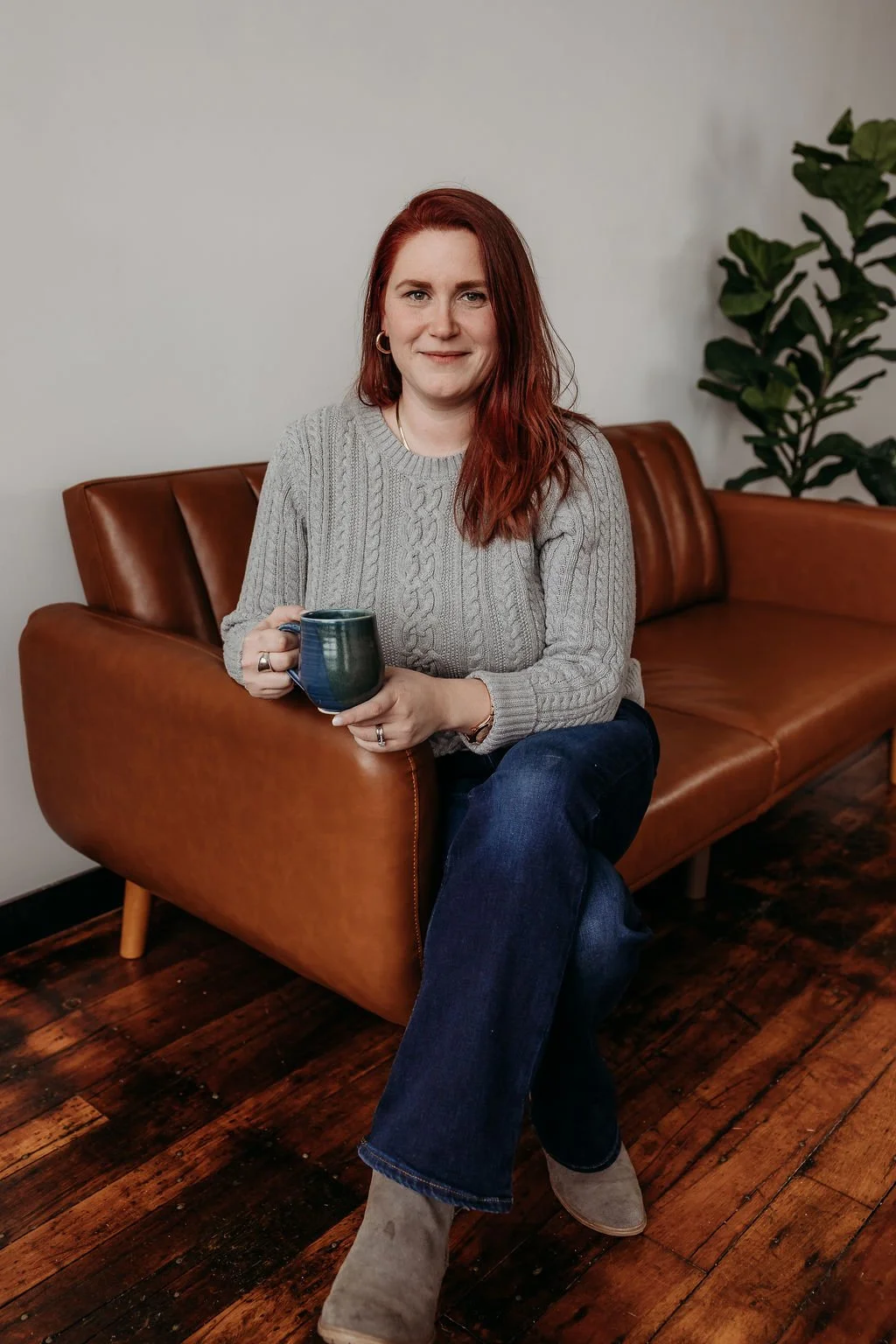
Instagram and Facebook for service providers in 2026: what to do, what to skip, when to pay
How do you beat the algorithm? In 2026 that question has a boring answer. You feed it the same thing your clients are already looking for, which is proof that a real human is on the other side of the screen.
This is the playbook for anyone who takes clients one-on-one, meaning you sell your time, your attention, and your expertise directly to a person. Wellness practitioners are who we work with most (independent medical providers, reiki, tarot, massage, therapy, coaching, nutrition etc), so they're who I'll keep pointing at. But it’s the same strategy for a photographer, a consultant, a website designer, copyrighter, an attorney, a hairstylist, a designer, a private tutor, anyone whose product is essentially themselves. If you sell physical products through a shop or an online store, a lot of the principles still apply, but this blog isn’t specifically for you.
the short, slightly annoying version (What Meta is rewarding now)
First, there isn't one algorithm. By Instagram's own explanation of how ranking works, the app runs a different ranking system for the main feed, for Reels, for Stories, and for discovery, each one depending on how people use that part of the app.
The signals that matter most across all of those systems, as Instagram's head Adam Mosseri says, are how long people watch your content and how often people send it to someone in their DMs. Watch time is the big one. A private share (someone sending your post to a friend who needs it) is the strongest signal you can earn for reaching new people, worth far more than a like. Saves matter too. Likes are the weakest of the bunch now.
When you post something public, the app shows it to a small batch of strangers first and watches how they respond. If they stick around, it shows it to more people, and eventually to your own followers. If they scroll past in the first couple of seconds, it goes nowhere. Your opening few seconds are the whole audition.
The non-negotiables before you post a single thing
Your profile is your storefront, and people decide whether to trust a one-person practice in about four seconds. So get these right before you worry about content.
Your profile picture should be a real photo of your face. A logo or a generated headshot signals the opposite of what people are buying, because they are choosing a human and they want to see one. Your name field should be your name plus what you do, since that field is searchable. "Jordan Lee | Distance Reiki & Tarot" gets found. A clever brand word nobody types into search does not. Your bio says who it's for and what they get, in plain words, and you point one link at your booking page.
Then pick your lane and stay in it. This used to be growth advice. In 2026 it's survival. Users can now tell the app which topics they want more or less of, and if your content doesn't read as one clear topic, you vanish from someone's feed the moment they trim their interests. You want to read as one clear thing for one clear person: a wellness account for people dealing with a specific problem, or a brand photographer for a specific kind of client.
Connect your Instagram and Facebook in one place so you post once and reach both, switch to a free business account so you can see your numbers, and set up saved replies in your DMs so answering people doesn't eat your whole morning.
What to post (what gets you found)
Short video is the discovery engine on both apps now. On Facebook, every video you upload is treated as a Reel, and Reels get shown to people who don't follow you before they're shown to people who do. For a new account with no audience, that's the entire focus. Video is how strangers find you. Everything else builds on top of it.
The first two or three seconds carry the whole thing, and about half of videos are watched on mute, so your opening has to land with the sound off and you need captions on screen. A line that names a feeling anyone recognizes, then a quick drop into your own world, beats a slow polished intro every time.
What to make: you on camera, talking like a person. Your real workspace, whether that's a session room or a desk. One small piece of the work itself (a card you pulled and what you noticed, the question you get asked constantly, the one mistake you watch clients make). Before you post anything, run it through one filter: would a stranger watch to the end, and would one person send this to a friend who needs it?
Carousels and photo posts do a different job. They build trust with the people who already found you, and the save-worthy ones (a simple explainer, a client's experience with the details changed) earn saves, which the app reads as real value. Stories are for your existing people: behind the scenes, replies, the daily work. And because two-way conversation is itself a ranking advantage now, when someone replies to a Story, reply back.
Write clear, keyword-rich captions, because the app reads them to figure out who to show you to, and keep hashtags to a handful of relevant ones. Stuffing thirty hashtags doesn't help and can get you suppressed. And post your own content. Reposting other people's work without adding anything gets you pushed down, and doing it constantly can drop you out of recommendations entirely.
this one stings a little (the AI problem)
I'm going to be blunt here, because someone has to. Use AI behind the scenes if that’s your thing. Use it to brainstorm or layout a blog if you must. The problem is publishing AI as your face and your voice in a business that is built entirely on you being a real human.
It backfires on two fronts. The first is your buyers. When someone hires you one-on-one, they're choosing a human's attention and judgment. When your feed is full of slightly-too-smooth generated images and copy that reads like it came out of a settings menu, it tells them the opposite of what you're selling. Clients see this as a generated, generic feed = fake scam.
This is doubly true in wellness. People are handing you their bodies, their grief, their nervous systems, the questions they haven't said out loud to anyone. The trust bar in this work sits higher than in almost any other service.
The second front is the platform itself. At the end of 2025, as Social Media Today covered, the head of Instagram said as AI makes polished content cheap and endless, the rare and valuable thing is realness, and Instagram would spend the year working to highlight real human creators and the people behind each account. Meta now pushes down content that reads as templated, automated, or generically AI-made, while AI used with a visible human point of view does fine. AI with no you in it gets passed over.
The tell, when a feed is built this way, is that it's faintly obvious even when people can't name why. The image is a hair too perfect. The caption says everything and means nothing. The fix is your own face and your own voice. The bar is not "polished." The bar is "real." A phone video of you talking, a photo of your real space, a caption in your own words. That is cheaper and faster than the AI version, and it wins every time.
Facebook, specifically, because people write it off
Don't skip Facebook for this kind of work. It has the widest age range of any platform, and a big share of users are 55 and older, which is exactly the slice of an audience that isn't on Instagram. This matters most for wellness, where a lot of clients are between 45 and 70, but it’s also true for any service whose buyers are more established. Some of your people live on Facebook, and so do the friends who recommend you.
The video strategy is the same: post Reels, they reach non-followers, and you can cross-post straight from Instagram so it isn't double the work. Facebook has leaned hard into video over the past year, with Reels viewing roughly doubling, which is exactly why it's the surface most likely to put a new page in front of strangers. A post that's just a link gets buried, so put your booking link in the first comment or pair it with a real image or a short video. Your response time is public and it's a ranking signal, so set saved replies and answer within a reasonable window. Fast replies help your reach, and they're the start of the booking conversation anyway.
You can work in a private Facebook group if you want (best for wellness brands): a space for past and current clients, the occasional live card pull or Q&A. It's a slow build, but it's loyalty. And word of mouth is still big on Facebook, so make it easy. Keep a pinned post that explains what you offer and who it's for, and get into the habit of asking happy clients to tag a friend who'd want it.
you are a humannnnn so act like one
You're one person, so the schedule that works is the one you can sustain. Consistency beats volume here. The apps reward steady output more than a big burst followed by silence, and posting every day until you burn out helps no one.
A realistic week looks like three to five posts, at least two of them short video. Two or three of those videos are aimed at strangers (your discovery layer), one or two are trust posts for the people who found you (a carousel, a real photo, a client story with details changed), Stories run most days for the people already there, and you spend a few minutes daily in the comments and DMs, because that's both a ranking signal and where bookings start.
Batch the hard part. Shoot several videos in one sitting, caption them, and queue them up. Scheduling your posts does not hurt your reach, (despite the myth that won't die). Once they're queued, your daily job shrinks to showing up like a person and replying to people. You don't need to be everywhere. You need to be consistent in one or two places and genuinely responsive.
What the timeline looks like fr
A brand-new account starts cold. The app doesn't know who you are or who to show you to yet, so early posts landing with a thud is normal and not a sign you're failing.
Organic reach is low across the board right now, low single digits as a percentage of your followers for a typical feed post, which is the whole reason short video and that audition system matter so much. Video is your one good shot at being shown to people who don't already follow you.
So set your expectations honestly: give it ninety days of consistent posting before you judge anything. The first month is mostly the app learning your topic and your audience. Discovery (a video reaching strangers) tends to show up once you've posted enough for the system to understand your lane and you've made a few things that hold attention. Bookings from social are a slower layer on top of that, because trust takes more than one good video.
And track the right numbers, which are not your follower count. Watch profile visits, saves, shares, DM conversations started, and clicks to your booking page. Those tell you whether the funnel is working. A follower count is a vanity number. A DM that turns into a booking is the business.
When paid ads make sense (or when they're just expensive)
The honest answer for a brand-new account is: not yet. Ads amplify what's already working. They don't fix a weak offer, an empty profile, or content nobody is responding to. Turn them on too early and you're paying to send strangers to something that isn't ready to receive them.
Build the foundation first: a real audience, even a small one, an email list, and a few posts that have proven they hold attention on their own. The cheapest, highest-return ads are the ones shown to people who already know you, which means past visitors, people who watched your videos, and your email list uploaded as a custom audience. Warm audiences convert several times better than cold strangers, at a lower cost. So your first ad dollars, when you're ready, go to those people. And because you work with clients anywhere rather than in one town, you're not buying a local radius. You're letting the system find people who resemble your existing clients and your warm audience.
When you are ready, here's how it works: You pick one clear goal, which for you is usually "message us" or "book a call," not "send traffic to my site." Meta's own ad guidance is to set a budget that runs for at least a week so the system has time to learn who responds, and in practice it needs a real volume of results, roughly fifty of your chosen action per week, before it optimizes well. That's exactly why tiny budgets don’t work. They never give the system enough to learn from
For the budget itself, work backward from your economics instead of from what feels comfortable. Decide what a new client is worth to you and what you'd happily pay to land one. If a new client is worth around three hundred dollars to you (a package, a series of sessions, a project) and you'd pay up to fifty to land one, and you want a handful of new clients to test, your test budget is that cost times the number of clients you want. Spend less than the system needs and you're just paying tuition.
Real numbers for 2026: the technical minimum is a dollar or two a day, but that's useless. For a small service business testing seriously, plan on roughly twenty to fifty dollars a day, and know that ad costs have climbed about twenty percent over last year. Let Meta place your ads across both apps rather than forcing Instagram-only or Facebook-only, since boxing it in usually costs you more. And give a campaign a few months of running and adjusting before you expect it to settle into something predictable. Ads are a layer you pour onto a fire that's already lit. They are not a way to skip building the fire.
The whole thing
The reason all of this points in the same direction is simple. In 2026, the platforms finally want what your clients have always wanted: a real person they can trust.
So the strategy for a one-person service business is less complicated than the panic makes it sound. Show up as yourself, on video, consistently, in one clear lane. Reply to people like the human you are. Let the proof build over a few months. Then, once something is clearly working, add ads to pour fuel on it.
If you want a second set of eyes on your own setup before you sink time into it, that's the kind of thing we do at Microdose. And if you're a product business rather than a one-on-one service, the funnel looks different enough that it's worth a conversation of its own. Either way, a marketing consultation is built for exactly one stuck point, which is a good place to start.
Kelly